Exhibiting Forgiveness
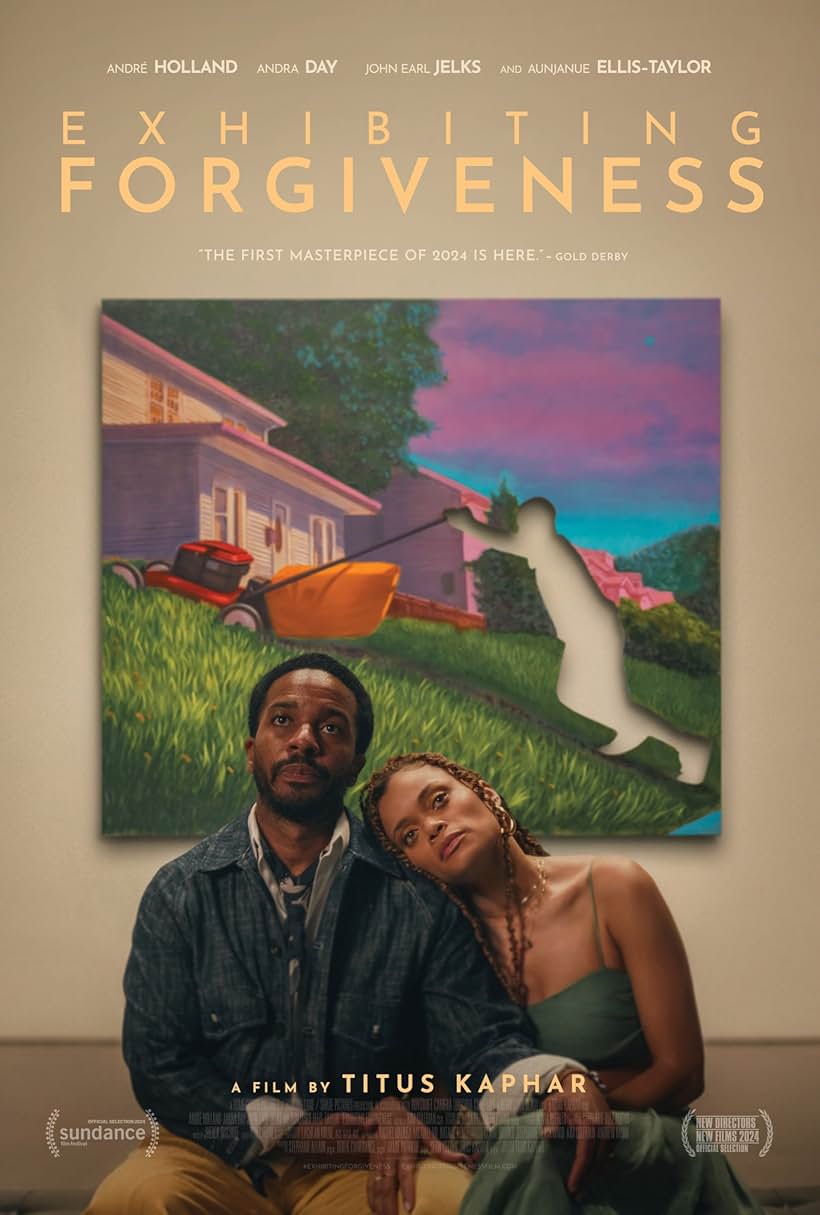
Exhibiting Forgiveness has a weird, awkward title that makes it sound like an Afterschool Special. Cast that aside. Everything else about writer/director Titus Kaphar’s dazzling feature debut is worth your attention. This is an affecting, insightful story about the damage addiction can do to a family and how difficult it can be to repair relationships in the wake of that damage.
Tarrell (André Holland) is a painter with post-traumatic stress disorder. He often wakes up from nightmares screaming. Musician wife Aisha (Andra Day) provides comfort and support. Tarrell’s artwork reflects his childhood trauma. It’s how he tries to make sense of it. That trauma comes roaring back when his mother Joyce (Aunjanue Ellis-Taylor) asks him to consider forgiving his father La’Ron (John Earl Jelks), a recovering crack addict who is finally understanding the pain his drug-fueled behavior wrought.
That could be the setup for a poor melodrama, especially since we’ve seen so many other films about addiction. What sets Exhibiting Forgiveness apart is the strength of the screenplay. Instead of going for easy drama, Kaphar dives deep into how his characters feel. La’Ron truly has changed and simply wants a chance. Tarrell has valid reasons for holding on to his anger for so long, as we learn through flashbacks. Joyce is guided to forgive her ex-husband through her faith – a faith her son doesn’t share in the same way. In scene after scene, the dialogue reveals their emotions with precision. No cheap, easy answers here.
Amazing performances bring the central scenario to life. Holland powerfully conveys the mix of pain and anger that drives Tarrell. There’s a nice subplot about him being a good father to his own son, and the actor makes you feel how resentment toward La’Ron is fueling that ambition. Jelks is similarly excellent, driving home his character’s horror at realizing the hurt he’s caused, while suggesting a streak of defiance remains inside. La’Ron is frustrated that Tarrell won’t accept that the drugs turned him into someone he never meant to be. Scenes between these two actors are thoroughly gripping.
The female characters are not throwaways. Day and Ellis-Taylor – who gives her second knockout turn this year, following The Supremes at Earl’s All-You-Can-Eat - bring additional shades to the story as Aisha and Joyce. Both women have their own views on forgiveness that, when expressed, give the men something to think about. Joyce, in particular, has a specific motivation for seeking peace in the family. Even though the plot is ostensibly about the guys, Kaphar is careful to show that the reverberations of one person’s addiction impact everyone else, in every direction.
A stylistic idea in which Tarrell intermittently sees his childhood self pushing around paintings is cool, although it interrupts the realism of the story. That’s a small matter compared to the great sense of humanity that permeates the movie. This is the most impressive type of human drama – the type that creates the feeling that you’re opening up a portal and glimpsing somebody’s actual life.
out of four
Exhibiting Forgiveness is rated R for language and brief drug material. The running time is 1 hour and 57 minutes.
© 2024 Mike McGranaghan