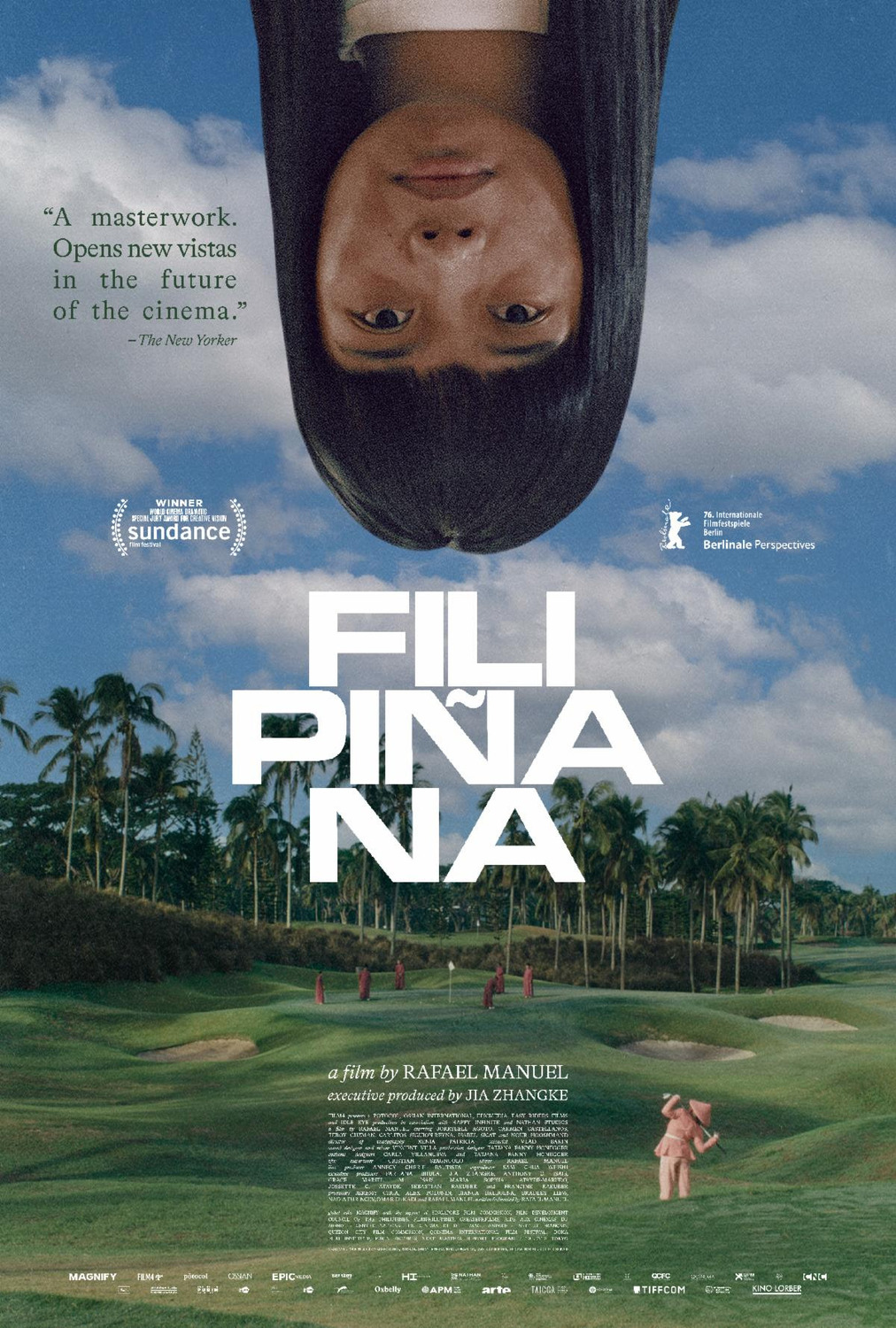
Filipiñana
It’s impossible not to think of Caddyshack when watching Filipiñana. Both utilize a country club setting to explore the class system. But whereas the 1980 Chevy Chase/Bill Murray classic did it through silly comedy, Rafael Manuel’s knockout debut feature takes a weightier approach that’s tinged with dark humor. The film hits with great force.
Isabel (Jorrybell Agoto) is a teenage “tee-girl” at a posh Manila country club. Her job is to sit at the driving range and put down balls for the golfers, thereby preventing them from having to complete the exhausting task of bending over. Most of them don’t even acknowledge her presence. Economic disparity is visible at every turn, with staff expected to excessively coddle members. They are mere servants, there solely to cater to the whims of the wealthy. Isabel gets to see just how deep this runs after being tasked with returning a golf club to the facility’s president.
There’s an additional subplot about an expatriate named Clara (Carmen Castellanos) whose uncle Renato (Carlos Siguion-Reyna) tries to convince her to return to the Philippines. Observing what goes on at the club does not endear her to his argument.
Filipiñana focuses on a lot of little details that underline the divide between the haves and the have-nots. A hungry Isabel is forced to steal mangos from the trees while extravagant meals go uneaten in the dining area. More effort is spent replacing an unsightly dead tree than to finding a staffer’s missing little girl. After all, if the golf course isn’t immaculate looking, players might become irate. Tee-girls aren’t allowed on the actual course, unless they happen to be someone’s mistress. The final shot drives home the total apathy shown toward the employees, who are viewed as essential only insomuch as they can make life easier for members.
This scathing satire provides a few uncomfortable laughs, as well as razor-sharp commentary on the often-dehumanizing treatment of service workers. One particularly impactful shot shows a line of men at the driving range, all swinging their clubs in unison. They’re in tune with each other but not with the world around them. It’s countered by another shot of the staff setting up the patio for lunch, their movements choreographed almost as if they’re cogs in a machine.
Manuel employs an interesting visual style in telling his story. He shoots in the square 4:3 aspect ratio to better focus our gaze where it needs to be. The camera never moves, although it sometimes slowly zooms in or out from an image. Shots are allowed to linger more than they need to, inviting us to scrutinize whatever we're looking at. Combined, these techniques create a hypnotic feeling, plus a weird type of suspense. Like David Lynch with Blue Velvet, the director is skilled at suggesting the menace beneath a pristine surface.
In the center of it all is Jorrybell Agoto, whose expressive eyes convey the undeniable rage inside of Isabel, a rage she dare not let out, lest she be terminated and therefore even more screwed than she already is. The actress gives a pitch-perfect performance in a movie that requires – and earns – your rapt attention. Filipiñana is a scream of anger at a system that callously oppresses masses of people for the benefit of a select few.
out of four
Filipiñana is unrated, but contains language and sexual content. The running time is 1 hour and 40 minutes.
© 2026 Mike McGranaghan