It Was Just an Accident
In the opening scene of It Was Just an Accident, a man (Ebrahim Azizi) and his family drive down a road at night, hitting a dog that runs out in front of their car. (Don’t worry – you never see it.) The vehicle’s engine is damaged in the process. The man is frustrated; his wife reassures him that God must have a reason for why they’ve been put on this path. It’s a wicked comment, given what transpires next.
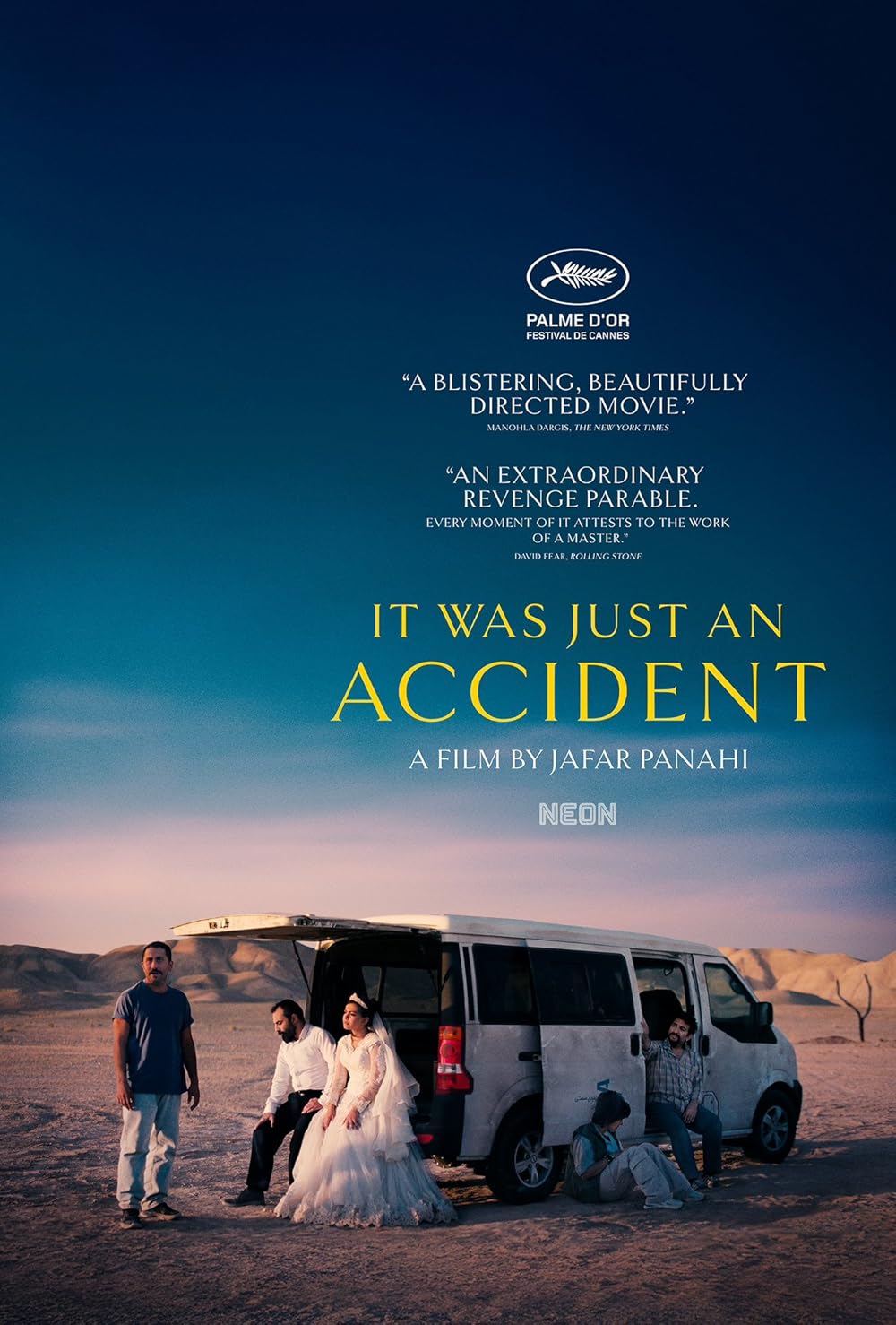
They get help from a stranger, who is working inside his garage. That stranger’s friend, Vahid (Vahid Mobasseri), freaks out upon hearing the man’s voice. He believes this is Eghbal, a.k.a. “Peg Leg,” the Iranian prison interrogator who tortured him and many others years before. Vahid kidnaps the suspect with an intent to kill, but he isn’t 100% sure this is really Eghbal, especially given the panicked protestations. To be sure, he drugs the man, locks him in a box inside his van, and seeks out several other former prisoners to see if they recognize him. They are wedding photographer Shiva (Maryam Afshari), bride-to-be Golrokh (Hadis Pakbaten), groom Ali (Majid Panahi), and Shiva’s hot-headed ex, Hamid (Mohamad Ali Elyasmehr).
It Was Just an Accident isn’t so much about whether the man is Peg Leg as it is about how the characters react to the possibility of encountering a dark figure from their shared past. Writer/director Jafar Panahi (This Is Not a Film) is interested in the psychology of the scenario. All the players have been traumatized by Eghbal and therefore believe he deserves comeuppance. They cannot, however, agree on whether they have the right guy, nor what kind of comeuppance is most appropriate. Many scenes in the film find them fighting or debating, each driven by the pain inflicted upon them.
That’s most evident in a stunning unbroken shot at the end that lasts at least ten minutes. Strong emotions break out for the characters. For the audience, there is the kind of tension that makes you hold your breath because you’re nervous about what might occur.
Psychology is not all Panahi is up to. It Was Just an Accident is an overtly political work. The filmmaker has previously been imprisoned for opposing the Iranian government. He alleged mistreatment while in jail. With this story, he is working out his own feelings about the oppression that has taken place in his country, while also extending a middle finger to the regime that put him behind bars. (The movie had to essentially be shot in secret, lest anyone discover its content.) The story delves into the lasting scars, both mental and physical, that dissenters like Panahi carry with them, while celebrating the fact that some of those dissenters refused to allow their spirits to be crushed.
A very economical style is used in telling the story. Shots are static or utilize only basic pans, and editing is strategically minimal. This allows viewers to fully focus on the characters and the moral issues facing them. The very last image we see, which Panahi holds on, is guaranteed to send a shiver down your spine. Bold, naturalistic performances aid in giving the plot urgency, to the point where watching the film almost feels like conspiring right alongside Vahid and company.
The experience is not easily shaken off. For the duration of its 105 minutes, It Was Just an Accident makes you tense and it makes you think.
out of four
It Was Just an Accident is rated PG-13 for thematic elements, violence, strong language, and smoking. The running time is 1 hour and 45 minutes.
© 2025 Mike McGranaghan