Lee Cronin's The Mummy
It’s highly unusual for a director to get possessory credit in the title unless they’re extremely well established. John Carpenter took them on several of his films, Lee Daniels took one on The Butler, and Luca Guadagnino had one on Challengers. Lee Cronin’s The Mummy likely features a possessory credit not because the Evil Dead Rise director has a big ego but to separate it from the original 1932 The Mummy, the 1999 Brendan Fraser blockbuster The Mummy, and the 2017 Tom Cruise dud The Mummy. Also, Universal owns the rights to “The Mummy” and this is a New Line Cinema release.
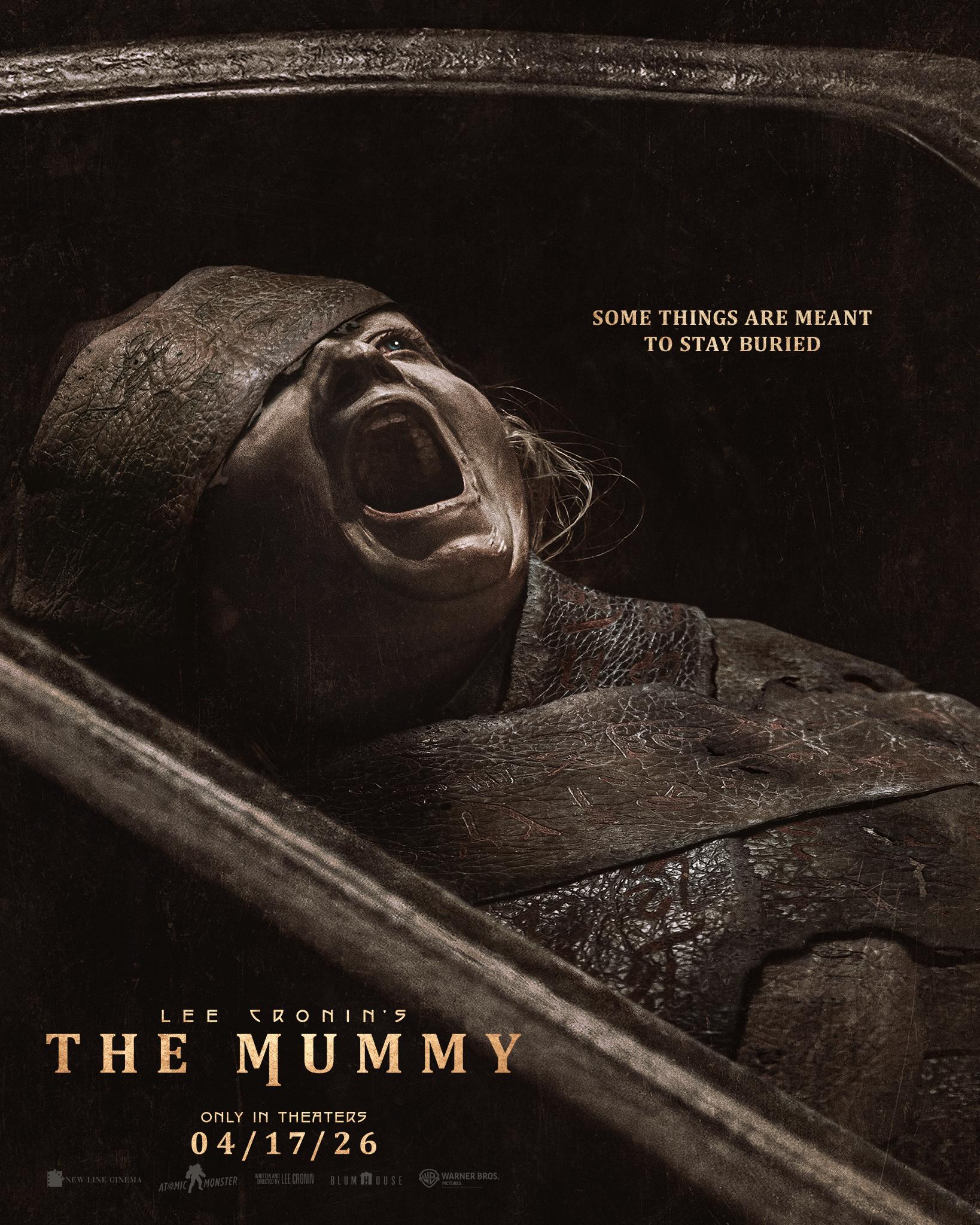
Cronin’s take on the idea is unique. Television reporter Charlie Cannon (Jack Reynor) and his wife Larissa (Laia Costa) have their young daughter Katie kidnapped while living in Egypt. Eight years later, she’s found alive. Katie (Natalie Grace) returns home in a bizarre state, thanks to extended captivity inside a sarcophagus. Her appearance is deformed and her temperament is explosive. Larissa believes she can cure her daughter through love. Charlie doesn’t agree, thinking they need to know exactly what happened to her. He works with Egyptian detective Dalia Zaki (May Calamawy) to find answers.
The movie’s plot is a tad ridiculous at times. It makes up for that through genuine freakiness. Cronin doesn’t hold back from devising sick, twisted sights to shock the audience with. Rotting, peeling flesh is a recurring sight. A scene where Larissa tries to clip Katie’s toenails will haunt my dreams for a long time to come. Several sequences instilled in me the same kind of revulsion I felt the first time I saw The Exorcist and The Omen. Those films are much better, but the sensation of witnessing a child character terrorizing adults is similar. All the stops get pulled out for the finale, which is an explosion of blood, gore, and carnage.
Pushing the limits of the R rating will please fans of freaky horror. There is more to the picture than just that. The screenplay deals meaningfully with the theme of parental guilt. Larissa quietly blames Charlie for Katie’s disappearance, since he was home with her when she disappeared. He blames himself just as much. That strain, combined with the disagreement on how to best deal with Katie’s strange behavior, threatens to take a toll on the marriage. Reynor and Costa bring convincing emotion to their roles. A particularly powerful moment finds the couple watching a videotape that reveals Katie’s fate; the pain the actors register is heartbreaking.
Those qualities help to smooth over a few rough spots. The film doles out clues regarding the circumstances around Katie’s disappearance, and it’s an understatement to say you’ll need to suspend your disbelief. We also don’t get a convincing explanation for how the girl is able to influence her older brother Sebastián (Shylo Molina) and younger sister Maud (Billie Roy). The 133-minute running time is additionally a bit excessive.
I’m willing to forgive minor flaws because the movie delivers scares in a satisfying manner. Cronin brings great ambiance to the visuals, including spectacular use of split diopter for significant shots. First-rate gore effects and editing maximize the intensity of the horror. Lee Cronin’s The Mummy aims high. Even if it doesn’t hit a complete bullseye, getting weirded out by the ghastly events onscreen is a blast for viewers with a taste for outrageousness in the genre.
out of four
Lee Cronin's The Mummy is rated R for strong disturbing violent content, gore, language, and brief drug use. The running time is 2 hour and 13 minutes.
© 2026 Mike McGranaghan