Musk
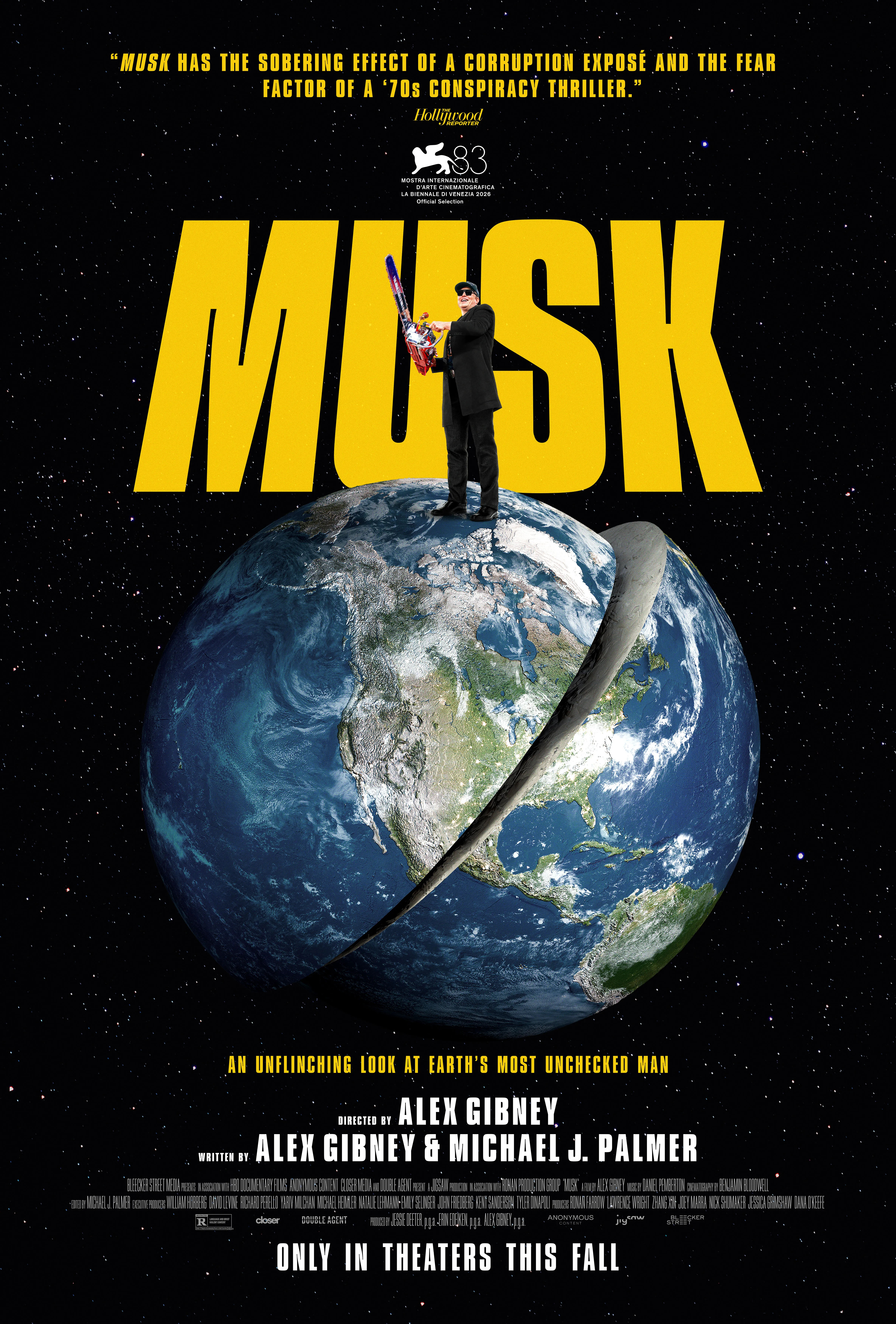
Elon Musk is easily one of the most polarizing figures of our time. Some people think he’s a visionary genius, whereas others think he’s the scum of the earth. Oscar-winning documentarian Alex Gibney offers an astute psychological portrait of the man with his latest film, Musk, and he brings receipts to back up his claims. Don’t be thrown off by the four-hour running time. It zips right by, and there’s a nice 10-minute intermission at the 1:46 mark.
Early parts of the movie detail how Musk made a tidy profit off a website he created, then used that money to buy Tesla, where he promptly listed himself as “founder,” even though he had nothing to do with the company’s creation. (He legally couldn’t call himself a “creator,” so he went with a title that wouldn’t get him in trouble.) This seems to be the moment where his ethics began to shift. Eager to portray himself as a groundbreaker, he sold the message that self-driving Teslas required zero driver attention – a lie that led to dozens of deaths and injuries.
Later, we learn how he did a similar thing with SpaceX, taking credit for other people’s work and presenting himself as being on the same technical level as the engineers doing the actual designing. During this time, according to Gibney, Musk grew psychologically consumed with the “visionary” label, touting that SpaceX aimed to start colonizing Mars within our lifetime, despite the vast scientific challenges that make that claim unrealistic. Whether it was possible didn’t matter, as long as the public bought into the fantasy.
Shady business deals and exaggerated accomplishments constitute the first section of Musk. Following the intermission, the film gets into its subject’s recent swing into politics. Gibney infers he acted more out of self-interest than any genuine political view. Facing investigation by nearly a dozen agencies for those questionable business practices and about to be indicted by the Biden administration for the Tesla deaths, he went “dark MAGA,” knowing he could convince Donald Trump to make the legal threats go away. He got more than he hoped for when Trump put him in charge of DOGE, allowing him to immediately gut all the government agencies that were investigating him.
You may think you already know a lot of this information, and you do. What makes the documentary worth seeing is how – through news footage, interviews with friends and associates, and Musk’s own words – it paints a picture of a man who believes his status as a visionary means nobody should be allowed to stop him from doing whatever he wants. Rules should not apply to him. And with the shocking amount of power and political persuasion he now holds, that ideology could profoundly affect America for a long time to come. When one person can pull so many strings, we’re all in danger of becoming puppets.
An especially troublesome chapter is devoted to Elon Musk’s status as a father. He has 14 known children; those who know him believe there are many more, due to his willingness to serve as a sperm donor. Repeatedly referring to his offspring as his “legion,” Musk apparently seeks to create a superlative race of intellectuals. It’s very telling that the child who became transgender has been roundly rejected by him. Gibney explores what this legion might mean in light of Musk’s influence.
Somewhat astonishingly, the man more or less admits all this. Gibney and his team have found video and audio of Musk pretty openly confirming the documentary’s allegations against him. Seeing the various aspects of his career assembled in this manner creates a sense of urgency. As billionaires increasingly bend the laws of the world to their will, there is plenty of reason for the rest of us to be nervous. Meticulously researched and continually gripping, Musk is an essential watch in our current time.
out of four
Musk is rated R for language and brief violent content. The running time is 3 hours and 52 minutes.
© 2026 Mike McGranaghan