Once Upon a Time in Harlem
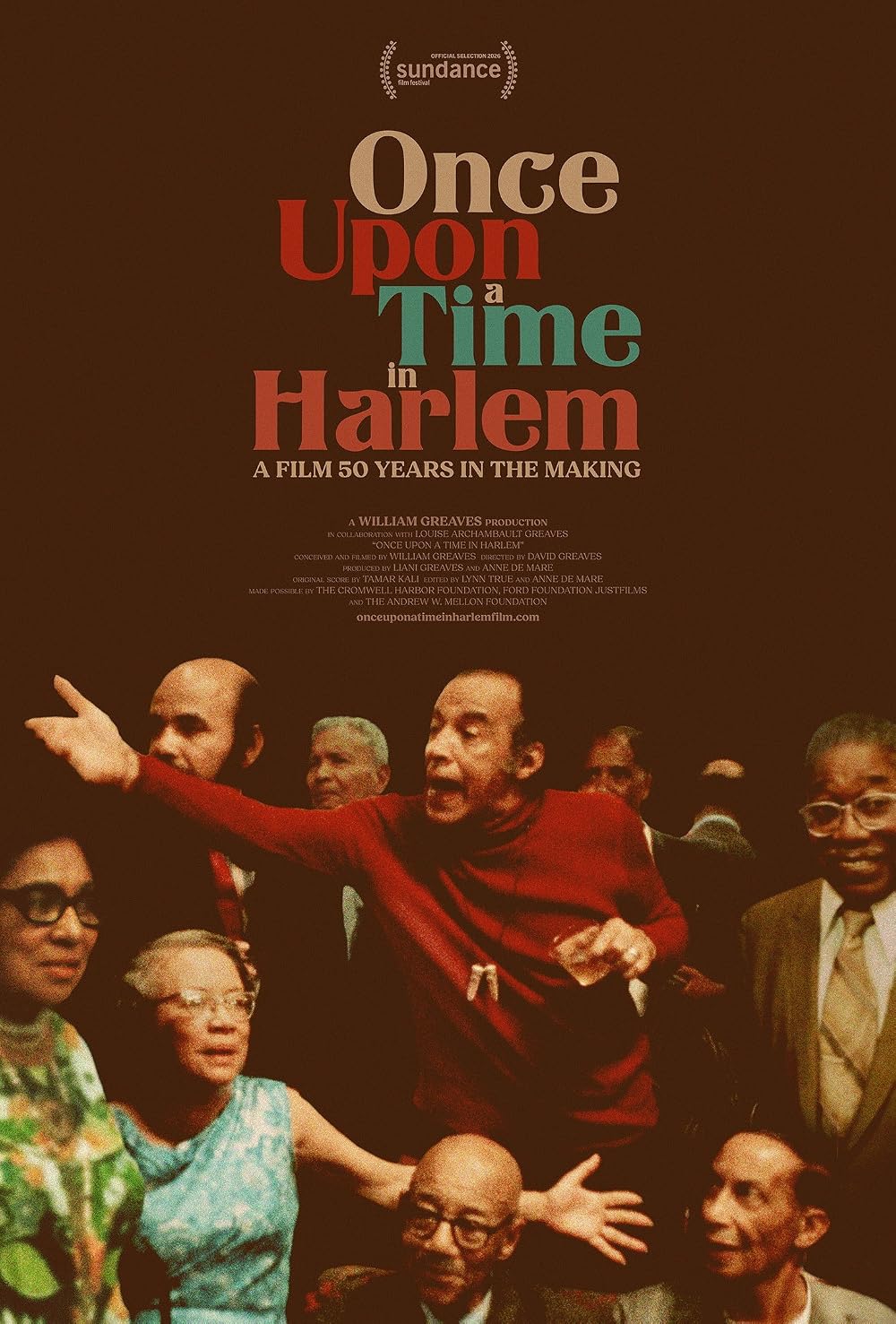
Once Upon a Time in Harlem is a miracle of a documentary. In 1972, filmmaker William Greaves hosted a party at the townhouse of jazz great Duke Ellington. His guest list was a Who’s Who of luminaries from the Harlem Renaissance. Included among them: musician Eubie Blake, painter Aaron Douglas, poets Frank Horne and Arna Bontemps, society editor Gerri Major, and journalist Ted Poston. For whatever reason, the 16mm footage he shot was never shown. Fifty years later, it was discovered in storage, restored, and edited together for our enjoyment and education.
The joy as the participants greet one another, some for the first time in decades, can be felt by the viewer. Greaves films them as they share memories of their contributions to the Harlem Renaissance, remember deceased colleagues, and evaluate the success of what they collectively did. There are laughs as they recall good times, emotions as they reflect on past troubles, and occasionally even a little bit of tension when two or more people disagree on what something meant or how something went down.
Watching the film is like going back in time and attending the party personally. You wander from room to room, never sure who you’re going to see next and never knowing what they’ll be talking about. It’s intoxicating to listen to the conversations; the electricity in the room is captured, making each one riveting. I found myself hanging on every word. It adds to the impact that the subjects are uniformly fascinating individuals. They come from all walks of art and culture, so that diversity keeps things lively.
Aside from being entertaining, the documentary is incredibly educational. I was familiar with a few of the attendees, unfamiliar with others. Regardless, their reminiscences teach a lot about what the Harlem Renaissance was and how it opened doors for future generations of Black creators. Stretching far beyond Harlem, the advances made by these talented folks paved the way for the likes of Spike Lee, Toni Morrison, Amanda Gorman, Abby Phillip, Jon Batiste, Kendrick Lamar, and so many others. The ability to absorb this much 21st century Black history in a breezy 100 minutes should not be passed up.
Once Upon a Time in Harlem ends with shots of people leaving the party, going on to resume their work and their lives. The celebration may be over, but the impact isn’t. Regardless of your race, gender, religion or anything else, this film is a potent reminder of what can be achieved when artists, writers, and musicians pool their talents and use them for the greater good.
out of four
Once Upon a Time in Harlem is rated PG-13 for some disturbing images, strong racial language, smoking, and brief partial nudity. The running time is 1 hour and 40 minutes.
© 2026 Mike McGranaghan