Once Upon a Time in the Middle East
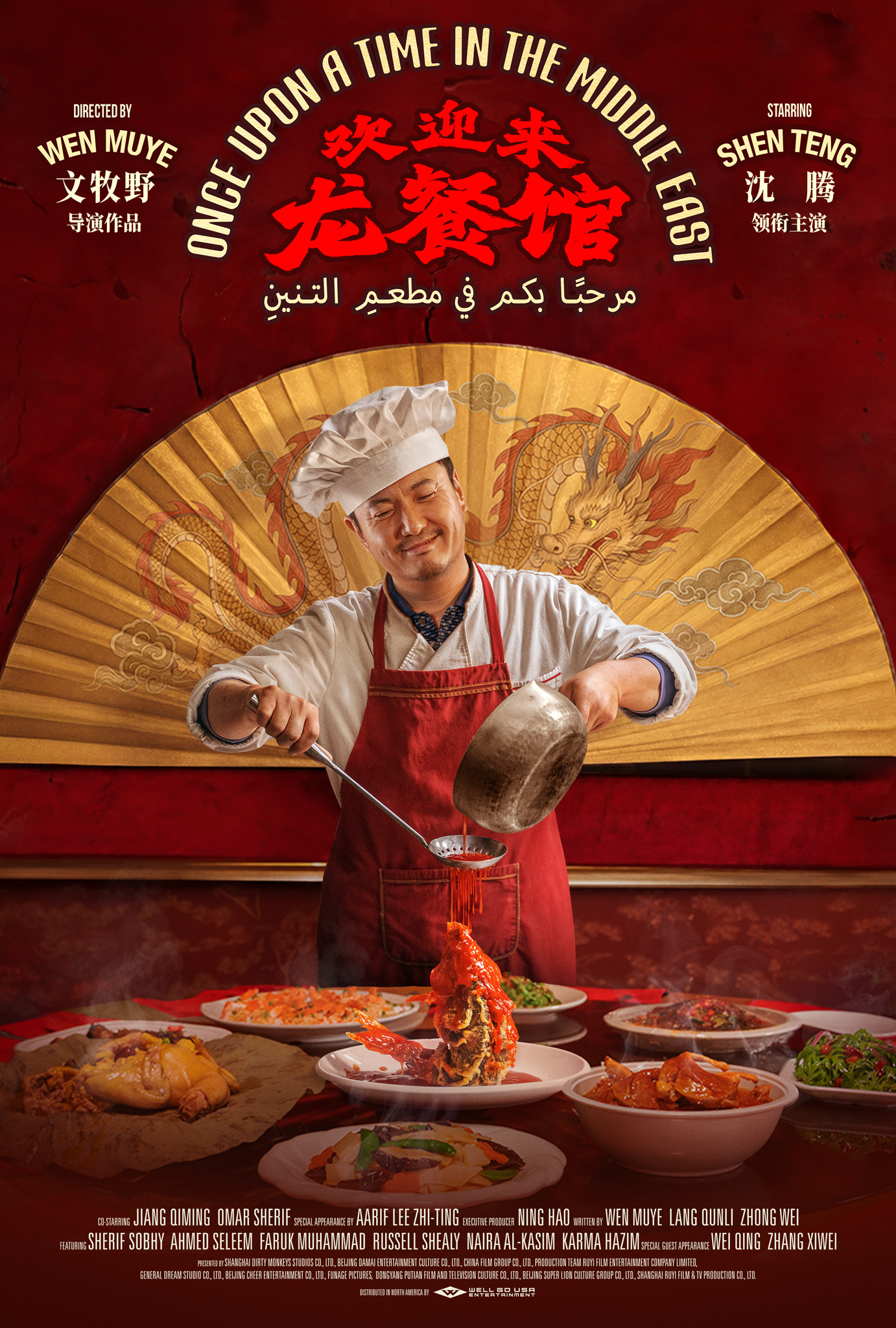
Chef Xu Fu (Shen Teng) is detained after entering the Middle East. His detainees question him about an episode from his past that tied him to a terrorist attack. He informs them that he was cleared of all charges. Food truly is all he has ever cared about. They demand he explain further, prompting him to tell the story of his visit to this same country two decades prior. That story constitutes the bulk of Once Upon a Time in the Middle East, the Chinese box office sensation that outgrossed both The Odyssey and Spider-Man: Brand New Day in its homeland and now arrives on our shores.
Needing money to support his daughter, the younger Xu accepts a job working for Zaid (Sherif Sabby), a businessman in the Middle Eastern city of Bahata. He’s allowed to come up with his own culinary creations, and the Loong Restaurant is soon packed due to his delicacies. Then the country enters a war with the United States, putting the eatery in peril of closing. What happens next is a series of events that find Xu and his floor manager Ma Junsheng (Jiang Qiming) shifting course by smuggling alcohol and selling it to American troops. Later, they end up in jail and, later still, attempt to rescue a group of children who are being trained as soldiers.
The plot of Once Upon a Time in the Middle East is sprawling, to say the least. It begins with a comic tone that eventually grows much darker. The throughline here is that Xu is stuck in the middle of a war that is not his own. He’s a foreigner, simply trying to operate a business. We consequently see the war through his eyes. A man who has devoted his life to feeding people is horrified by the death, destruction, and hatred he sees around him. The moral question for Xu becomes, “What can I do to help”? That’s the heart of the film. It’s a reminder that common decency, difficult though it may be to maintain at times, still makes a difference in an increasingly complicated world.
Drama is abundant in the movie. There are action sequences, as Bahata is bombed, leaving the characters scrambling to survive. There are tense prison sequences, with Xu facing various threats. Personal dilemmas factor in, as well, especially as Xu’s daughter resents his long disappearance from her everyday life. In that respect, the story has a bit of Forrest Gump syndrome. The character goes through a lot in one lifetime. His travails are always riveting, though, and they take you through a range of emotions. Some are joyous, some exciting, others downright tragic. Despite the 141-minute running time, there’s no room to be bored.
Director Wen Muye misses no opportunities to include cooking montages. The close-ups of food preparation are emphasized by amplified sound effects. Chopping and sizzling are almost like explosions. The effect conveys the extreme meticulousness Xu puts into his work. It’s no exaggeration to say these sequences are mouthwatering.
Shen Teng gives a touching performance as Xu, radiating kindness throughout. The actor meaningfully portrays the chef’s increasing weariness to the atrocities he sees. That makes the character’s determination to remain compassionate extra powerful. Once Upon a Time in the Middle East is a very good film about the difference one man makes by refusing to let cynicism overtake his empathy.
out of four
Once Upon a Time in the Middle East is unrated, but contains strong language and some graphic violence. The running time is 2 hours and 21 minutes.
© 2026 Mike McGranaghan