Romería
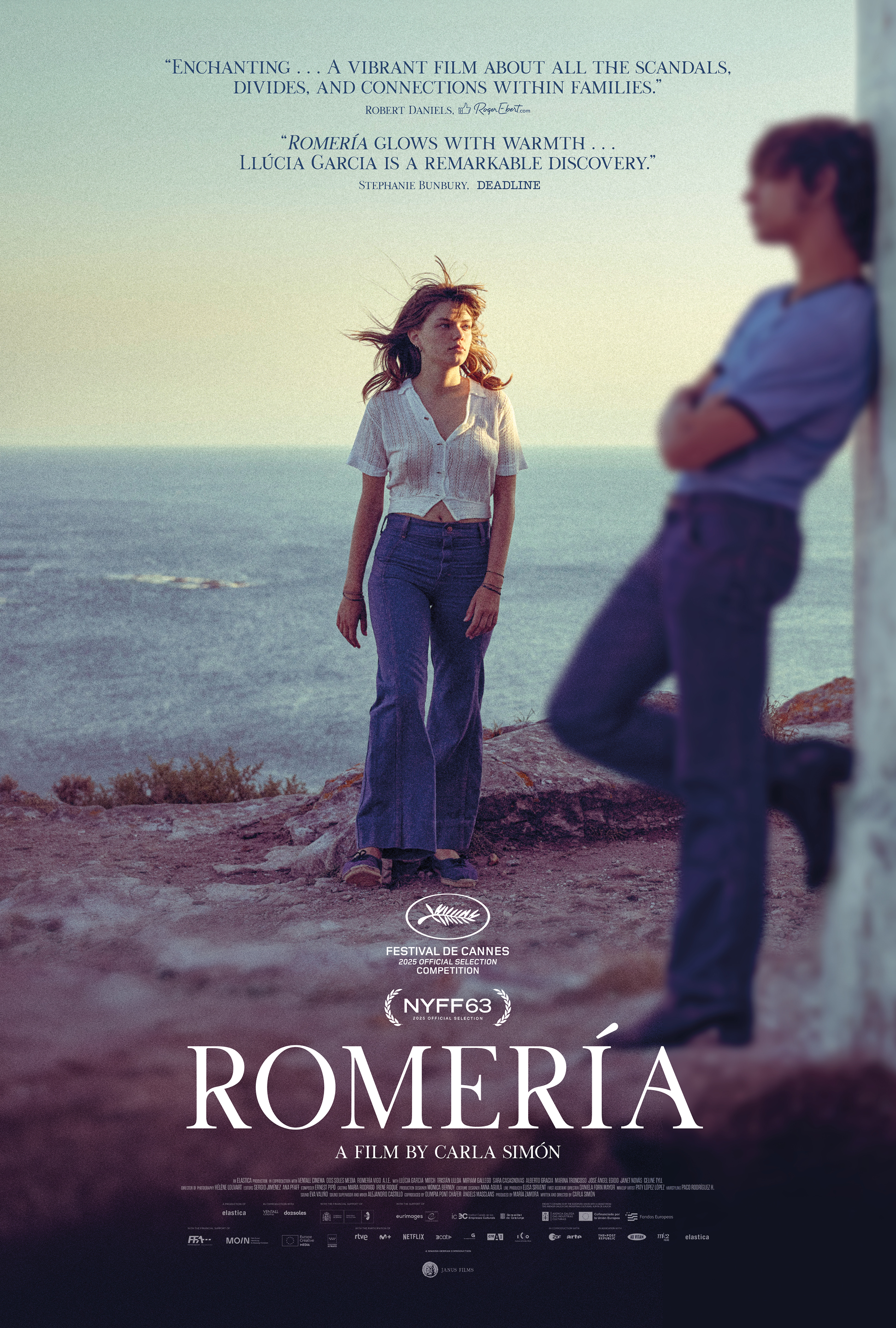
The year is 2004. Marina (Llúcia Garcia) has just turned 18. She grew up with adoptive parents because her biological parents died a few years apart when she was very young. While preparing documents for college admission, she discovers that her name isn’t listed on her father’s death certificate. Needing to get this done – and curious about the lives of her mom and dad – Marina travels to the Spanish city of Vigo to have her grandparents sign an official document stating that their son did indeed have a daughter. Meeting long-lost aunts, uncles, and cousins, she begins asking questions that eventually reveal unpleasant secrets from the family’s past.
This is the premise of Romería, a semi-autobiographical film from writer/director Carla Simón, whose Summer 1993 was an arthouse hit back in 2017. With a delicate pace and strong sense of family dynamics, it draws viewers into a very relatable mystery.
What impresses me most about the picture is how naturalistic everything is. Garcia gives a quietly powerful performance as Marina. She makes the character inquisitive without being pushy, and sentimental without being sappy. We sense the void in her life that comes from lacking complete information regarding her parents. Realizing that some of the info she does have is inaccurate compels her to push further, even if it means offending her grandparents.
Scenes showing her interacting with the clan have an almost documentary-like feel. You easily forget that these are actors reciting written dialogue. Energy varies from scene to scene, because several of Marina’s relatives, like cousin Nuno (Mitch Martín), are supportive of her search for answers, whereas others prefer to keep the skeletons in the closet. There is no shocking revelation here; what Marina learns speaks to darker elements from the 1980s that rocked many families just as they have this one. Romería’s authentic tone allows it to hit hard nonetheless.
Simón takes a big storytelling gamble in the third act, veering into magical realism for an extended flashback showing a piece of Marina’s parents’ life together. Interestingly, she has Garcia also play the mom, while Martín takes on the additional role of the father. Throughout, there is a suggestion that Marina and Nuno share an attraction, so this gambit conveys the notion that the young woman comes to a revelatory understanding about both herself and her mom and dad. For a moment, it’s easy to be confused, but once you grasp it, the effect is undeniably emotional.
Romería further benefits from gorgeous cinematography. The family is in the boating industry, allowing for plenty of shots at sea. It’s yet another way in which the story plays like real life. By the end, you’ve gone on a significant journey with Marina. Thanks to the excellent filmmaking and Llucía Garcia’s heartfelt performance, that journey will mean as much to you as it does to her.
out of four
Romería is unrated, but contains adult language, drug use, and sexuality/graphic nudity. The running time is 1 hour and 54 minutes.
© 2026 Mike McGranaghan