Suncoast
Suncoast may be the nicest movie ever made about death and grief. It offers a nice, comforting message about humans’ innate ability to cope. It’s also populated with nice characters. Oh, they’re definitely flawed, yet underneath those flaws, they truly care. This will sound like a backhanded compliment, and I don’t mean it to, but this film is to death what Green Book was to racism, i.e. a story that tries to offer a sense of optimism while dealing with a painful, unpleasant subject.
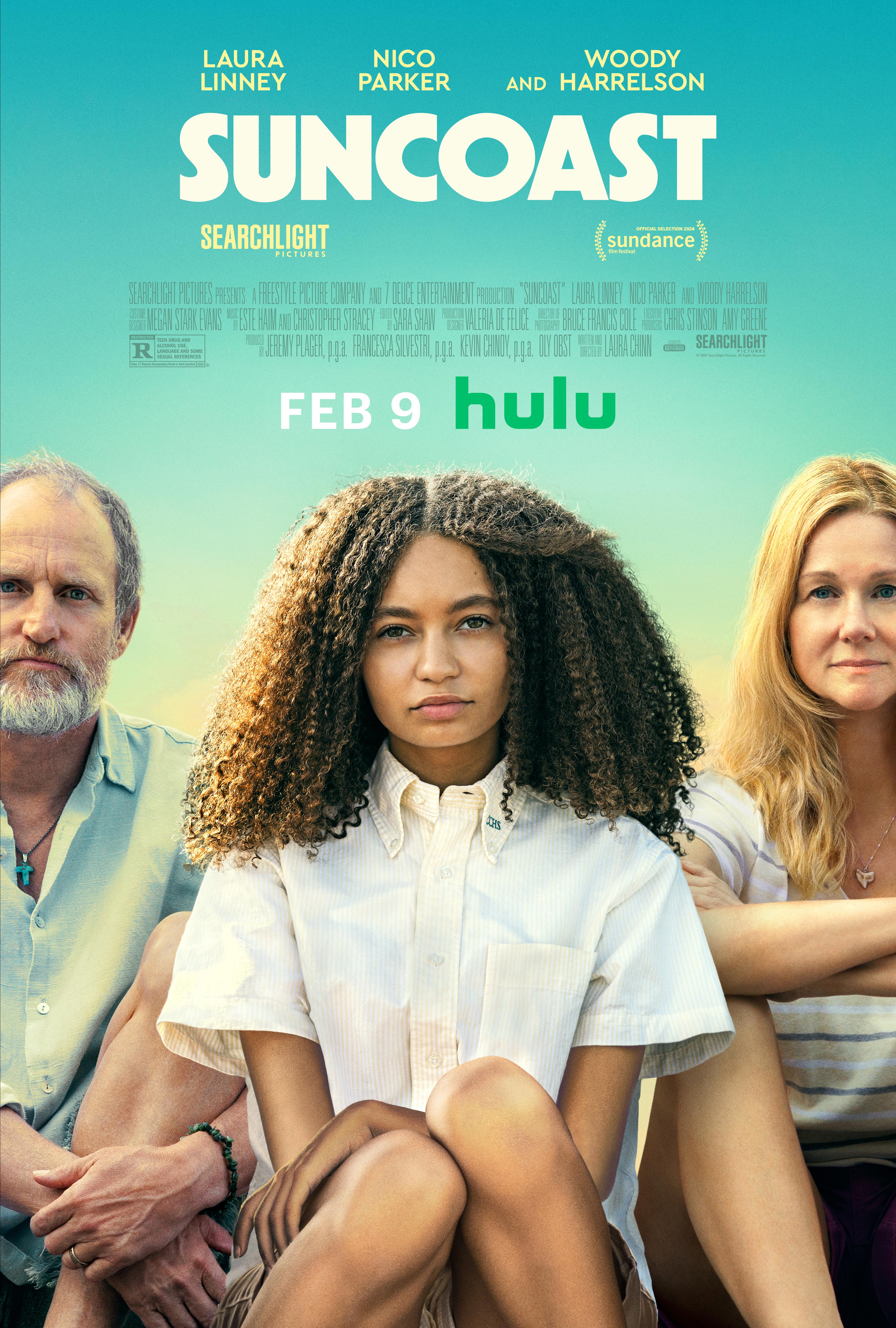
Doris (Nico Parker) lives with harried single mom Kristine (Laura Linney) and terminally ill brother Max (Cree Kawa). She resents having to care for Max while their mother works. With his illness progressing, Kristine makes the decision to put him in hospice care, and because she knows he’ll be dying soon, she temporarily moves in with him. Doris uses the opportunity to enjoy freedom, hosting booze parties for her school classmates and becoming popular in the process. Kristine pressures her to spend time with Max while she still can. Doris is ready to discover herself, though, leading to tension between them.
Writer/director Laura Chinn based Suncoast on personal experience. There’s an interesting backdrop here, as the story unfolds during the early 2000s. Like Chinn’s brother, Max is in the same hospice as Terri Schiavo, the woman at the center of a years-long legal debate over her husband’s desire to remove her feeding tube because she was in a permanent vegetative state. Doris’s story plays out amid media chaos at the hospice. Woody Harrelson portrays Paul Warren, a widower who has been drawn to Florida by Schiavo’s case. He befriends Doris, attempting to dispense wisdom to the teen.

The subject of death is explored in a fresh manner in the film. Now free of having to care for Max, Doris begins pursuing her own social goals. She does this in part as a form of denial. Staying busy with friends keeps her from thinking about her pending loss. Kristine, on the other hand, can think of nothing else and resents the fact that her daughter doesn’t have the same mindset. Inherent in the plot is the theme of how different people have different reactions to death. Especially for a young person, it can be a terrifying prospect to face. To the story’s strength, you can sympathize with both characters, despite them disagreeing with each other.
Nico Parker (Reminiscence) gives a performance that’s impressively real. The actress deftly avoids melodrama, instead creating a character whose internal dilemma is understandable. Scenes she shares with Linney ignite a spark, as mother and daughter bicker fiercely as they make their way through an unimaginable event. Interactions between Doris and Paul are equally good, with Harrelson credibly conveying the deep well of empathy this man has. He knows what’s in store for his new friend and seeks to cushion the blow however possible.
Suncoast peppers its story with scenes of humor to stave off any chance of becoming a total downer. You might be surprised how funny the movie is in spots. Nevertheless, have some tissues ready for the last twenty minutes. Your tears will flow. The point isn’t that death sucks or that it’s tough to lose someone; it’s that life goes on, even if we feel like it shouldn’t, and the way to honor the deceased is to embrace the days they won’t be here to enjoy. Again, it’s a nice message – emotional without being too upsetting. We need an approach like this now and again.
You can find harder-hitting, more incisive films on the topic, Rabbit Hole and A Monster Calls among them. If you want one that goes down a little smoother without sacrificing substance, Suncoast is your best bet.
out of four
Suncoast is rated R for teen drug and alcohol use, language, and some sexual references. The running time is 1 hour and 49 minutes.
© 2024 Mike McGranaghan